


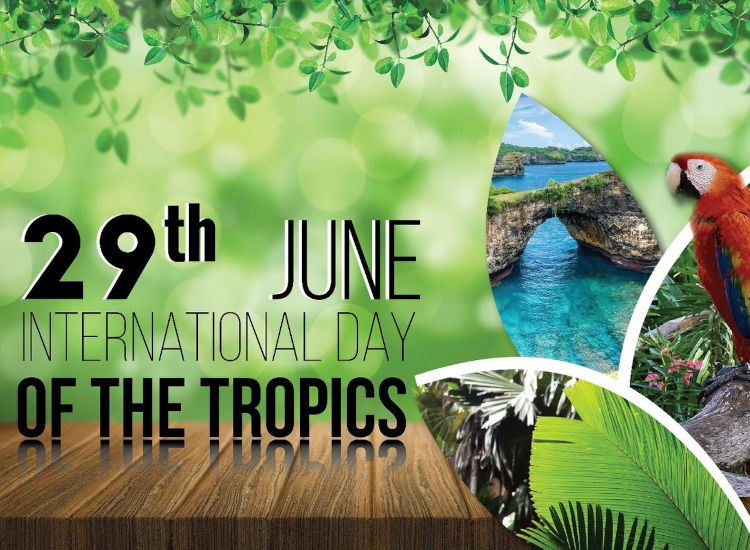
International Tropical Day is one of the UN events that takes place every year on June 29. Its main goal is to raise awareness of the international community about the tropical zone of our planet, the challenges it faces and the emerging opportunities that arise.
The tropics or tropical zone is an area of the Earth that surrounds Ecuador. It is located between the Tropic of Capricorn in the Southern Hemisphere and the Tropic of Cancer in the Northern Hemisphere. The tropical climate is characterized by very hot weather and the temperature remains relatively constant throughout the year. There are different types of climate in the tropical climate zone: the tropical forest climate, the tropical monsoon climate, the tropical wet and dry climate (savannah).
The tropics, as a region, represent 40% of the total surface of the Earth and host about 80% of the biodiversity of our planet. 40% of the world's population lives in the tropics, so the region is home to much of the world's cultural and linguistic diversity. While tropical nations have made significant progress, the tropics still face various challenges in the field of sustainable development.
International Tropical Day was established by a decision of the UN General Assembly in 2016 and aims to raise awareness of the international public, at all levels, on issues affecting the tropics and to highlight the important role that tropical countries will play. in achieving the UN Sustainable Development Goals.