


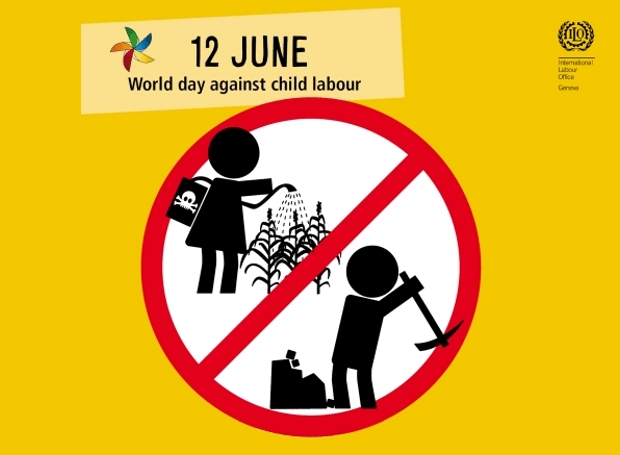
World Labor Day is celebrated every year on June 12. It was established by the International Labor Organization, with the aim of combating child labor and more specifically the reduction of child trafficking. It is estimated that each year, approximately 1.2 million children fall victim to the exploitation of a well-organized network, which has set up a bridge to transport children from developing to industrialized countries.
June 12 is also dedicated to the children of the African continent, most of whom work from very tender ages and under adverse conditions.
In 1999 most of the member states of the International Labor Organization signed an agreement obliging all parties to take the necessary measures to reduce the phenomenon of child labor. To date, however, the results of this agreement have not been made visible.
According to the International Labor Organization, one in six children in the world works in an environment that is detrimental to their mental and physical health. 73 million of working children are under the age of ten and every year at least 22 thousand of them are killed in accidents at work.
An estimated 171 million children around the world work in mines, quarries and other hazardous workplaces or with hazardous materials such as chemicals, pesticides or heavy mechanical equipment, according to a UNICEF report. They include an estimated 246 million working children, under the age of 18, who should normally be educated in classrooms, gaining supplies for a better life. "Children as young as five years old work hard, mining rocks, gold, diamonds and precious metals in Africa, Asia and South America, at the constant risk of dying in an accident at work, being injured or becoming chronically ill.
UNICEF has launched a joint effort with the International Labor Organization in poor countries around the world to end child labor in mines and quarries and enroll them in schools. In Greece, about 50,000 minors work in shops, handicrafts, factories, agricultural work, while every year 10,000 children drop out of compulsory education and lose their right to a future of equal opportunities.
The data are estimated, as there is no similar research on the subject, and this is exactly one of the political demands of the "Network for the Rights of the Child", that is, to operate the institutionalized Observatory for the Rights of the Child.
Souce: https://www.sansimera.gr/worldays/116