

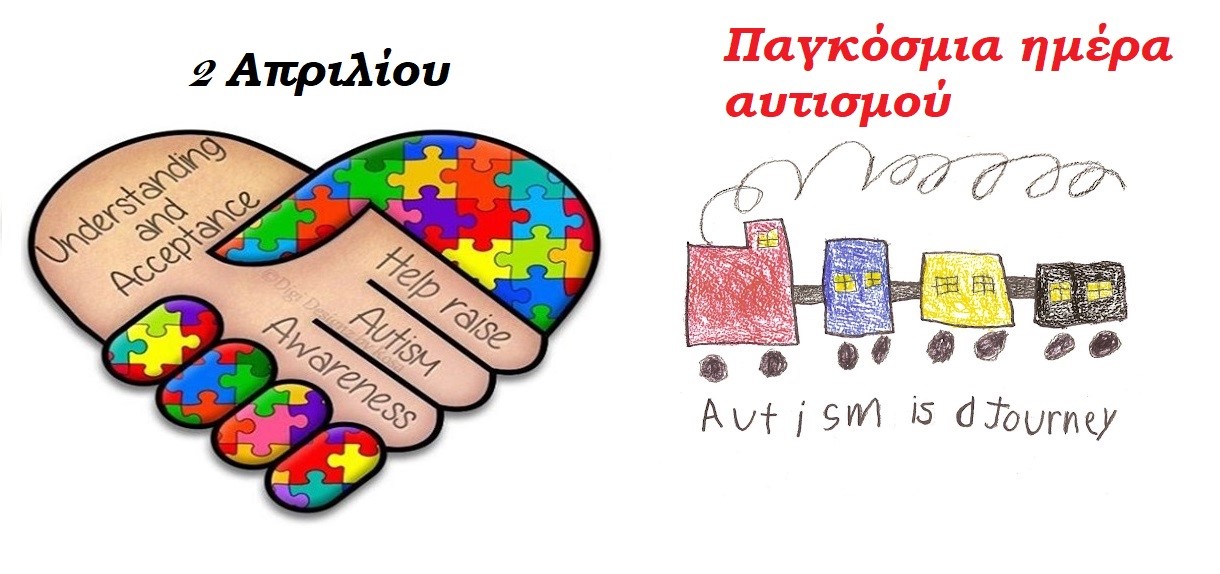
World Autism Day was established to be celebrated every year on April 2, by decision of the UN General Assembly and to inform the world public about autism and to raise awareness about the smooth integration of autistic people into society.
What is autism? Autism is the general term for a group of complex brain development disorders that lead to a variety of difficulties and limitations in the formation of cognitive functions, communication and the processing of sensory stimuli. Autism is a complex neuropsychiatric disorder that inhibits the normal development of the human body and isolates the sufferer from the rest of the world.
The autism spectrum is characterized, to varying degrees, by difficulty in social interaction and social comprehension and emotional transaction, by difficulties in verbal and non-verbal communication, and by repetitive, stereotyped behaviors and activities that affect the functioning of the individual. Autism can be linked to mental retardation, difficulty concentrating and coordinating movement, and physical health issues such as sleep disorders and gastrointestinal disorders. Some people with autism have excellent skills and excel in music, math or the arts.
Autism seems to have its roots in the very early development of the brain. However, the most obvious signs and symptoms of autism first appear at the age of 2 or 3 years, ie we can safely say that it manifests before the age of 3 years and lasts for a lifetime. The development of effective methods of early diagnosis and early intervention with the following application of appropriate psychological, educational and therapeutic approaches, which will be done early and will have continuity and consistency, can improve the situation and in many cases, significantly. For this to happen, however, there must be increased awareness.
In all forms of autism, even mild ones, there are common and specific difficulties that need to be properly identified and invasive procedures developed. Sometimes autism can coexist with mental retardation, disabilities and other medical syndromes.
How common is autism? In America alone, 1 in 110 children has some form of autism, an increase of 600% over the past two decades. Careful research shows that this increase can only be partially justified by the improvement in diagnostic tools and the increase in awareness. At the same time, according to studies, autism is three to four times more common in boys than in girls. More children are diagnosed with autism than with childhood cancer, juvenile diabetes or AIDS as a whole.
Statistics show that the incidence of autism is increasing by 10 to 17 percent per year. There is no confirmed explanation for this steady increase, although better diagnostic methods and environmental impact are considered to be the two most important reasons.
What causes autism? Not so long ago, the answer to that question would be "we have no idea." But research is now beginning to provide answers. First of all, we now know that there is no single cause of autism, just as there is no single type of autism. Over the past five years, scientists have identified a number of rare genetic changes or mutations associated with autism.
A small number of them are capable of causing autism on their own, although most cases of autism appear to be caused by a combination of the aforementioned genes that increase the risk of developing autism, as well as environmental factors that affect early brain development. With the indisputable presence of a genetic predisposition to autism, there are a number of non-genetic or environmental factors that appear to further increase a child's risk of developing autism.
These risk factors include events before and during childbirth. These are the old age of both parents at conception, the illness of the mother during pregnancy and some difficulties that may occur at birth, especially those related to insufficient oxygenation of the baby's brain. It is important to keep in mind, however, that these factors do not cause autism on their own, but increase the risk in combination with genetic factors.
Recent research suggests that the risk is lower for women who take vitamins during pregnancy and even before conception (especially those containing folic acid). At the same time, more and more researchers are examining the role of the immune system in autism. In short, areas of research into what causes autism include: genetic predisposition and genetic factors, changes in brain structure, deficiencies in enzymes / vitamins / minerals, infections, environmental factors, etc., but are not limited to the above. Research largely focuses on the genetic basis.
Early diagnosis allows the provision of family support, early intervention that will result in great benefit for the child, addressing his special needs, understanding his behavior, improving his educational performance and cognitive skills, better development. There are three main characteristics of autism: • Communication disorder (difficulties in the use of language and speech, deficient comprehension and problems of understanding concepts, etc.).
Impaired imagination (with obsessive preoccupation with specific interests and stereotyped behaviors and lack of flexibility in thinking and adapting to situations, etc.). • Social disturbance (poor social contact, confusing interaction, etc.).
What does autism spectrum disorder mean and is there a cure? Every person with autism is unique. The spectrum of autism is very large and at one end it includes the typical form of autism, while at the other it includes the forms of high functionality, with intermediate diffuse, various developmental disorders.
Many autistic people have excellent skills: academic, musical, etc. About 40 percent have mental abilities that average or even above that. Many highly intelligent and functional people with some form of autism may never be diagnosed and deal with their problems on their own and excel in society, without at the same time being "stigmatized".
Indeed, many people on the autism spectrum should be proud of their abilities and their unique way of looking at the world and reality. Some autistic people, of course, have significant disabilities and are not able to live independently: a significant percentage of people with autism, while they can develop their skills through education, can not nevertheless live independently, without constant care. But it can be responsible for carrying out simple tasks.
About 25 percent of people with autism have language disorders, but they can learn to communicate through other means. The earlier the intervention, the more likely it is that children with autism will not stand out from the rest, no matter how separate they are in some areas.
Interventions We emphasize that these autistic people should receive appropriate, personalized care and not feel excluded. Autism disorders are diverse and complex and to treat them require specialized interventions in various phases, throughout the life of the individual and according to his needs, by properly trained staff on an individual basis and with other children in kindergartens. day centers, schools.