


What is word finding?
As we speak, we must find the words that express our messages. From time to time, each of us has difficulty finding a word. We may feel that the word is "on the tip of our tongue". We know the word we just can not remember it when we need it. Children with difficulty finding words have difficulty remembering the right word on a daily basis and some children realize they are finding the wrong words. In both cases, children may become angry at trying to find the words and at interruptions in communication when they fail to find the right words.
What are the symptoms when there is difficulty in finding words? Each child presents in a unique way the exact characteristics of the word finding problem. However, some common features are:
Substitution with another word that has a similar meaning. A child can say "key" (the tool) instead of "hammer", "pie" instead of "cake" and "gasoline", instead of "gas station".
Substitution with a word that sounds similar. Some examples include "knot" instead of "bow" and "basement" instead of "ground floor". Substitution with a visually similar word, such as "clock" instead of "compass" and "snakes" instead of "onion pieces".
The description of a word. Children can explain the word they can not find. For example, one child said, "the place where footballs are played" instead of "stadium" and "what horses have" instead of "hooves".
The frequent use of non-specific nouns such as "thing" and "such" and general verbs such as "make" and "do".
The use of extended pauses. Sometimes children pause for a long time while trying to think of a word. They often "fill" pauses with words like "ee…" and "is… is… is…"
How can you help your child improve in finding words?Increase of lexical knowledge
When we know more about a word, we can find it more easily as we speak. You can help your child learn about the meanings and sounds of words. Here are some suggestions:
Divide the words into categories. Think of titles that interest your child, such as "jungle animals" and "football-related things." You may want to pick one category each week. You could play games in which you and your child try to think of many words that belong to the same category. Or you could suggest doing a craft work, such as a notebook with pictures grouped by category.
Describe the meanings of the words. For example, if "leopard" is a new word for your child, you can describe the leopard's physical characteristics or what it eats and where it lives. You could also compare the word with words that are opposite or similar in meaning. For example, you could describe what leopards look like with cheetahs, panthers, lions, and tigers.
Make rhymes and puns. Rhymes, even those that do not make sense, can help children learn how words sound.
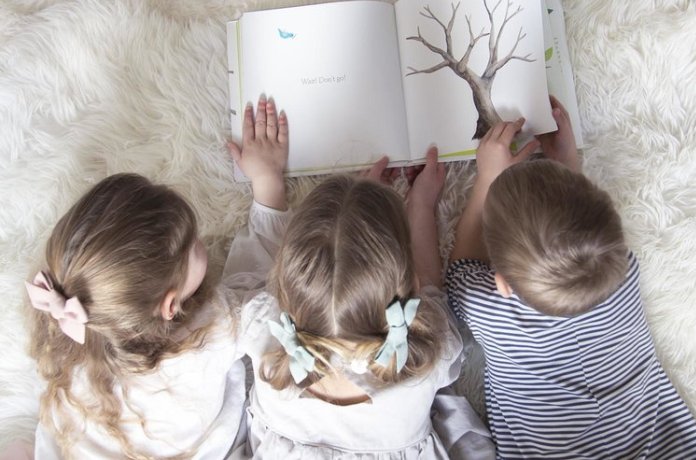
Read often with the child. Books help in learning words because the words are presented in a sentence that has semantic coherence and because a given set of words, related to the subject of the book, is repeated throughout the book. This gives your child many opportunities to hear the word and understand its meaning.
Make leaflets with important words. You can tell your child to cut out pictures of the target words and stick them on the booklet. Children who can read and write may want to make written word lists instead. Your child can refer to the booklet during word games and activities or take another look at the booklet for their academic activities.
The words you use should be the ones your child considers important. For example, you can play word games with the names of family members or friends, with words related to favorite activities, or with words used in school lessons.
Provide helpful information to help you find words You can also help your child in times of difficulty finding words. Consider the following strategies:
Give the child some helpful information when you know which word he is trying to say. For example, a child was trying to remember the name of Aunt Sophia. He said, "I went to see Aunt D." and then took a long pause. His mother gave him an auxiliary element for the name of Sophia saying the first sound of her name ("s"). The child was able to use the first sound as an aid to succeed in finding the name.
Sometimes, helpful information that is more related to the meaning than to the sound of the word can also help. For example, the mother in the previous example might have tried "Uncle Nikos and Aunt D." as an auxiliary element. This could help in finding the word effectively, as the aunt's name is often associated with the uncle's name.
Ask your child to think of another way to express his or her thoughts. Children, who can find a synonym (for example, "runs" instead of "jogs") or a phrase that has a similar meaning (such as "moves fast" instead of "jogs") can also communicate effectively. This strategy can help reduce the child's anger, as the child will be able to communicate effectively, even when he can not find a specific word.
Reduce the stress associated with finding words
Give your child time to think. Do not push the child and do not try to complete his sentences. If you have a large and talkative family, make sure that each member has the opportunity to speak, so that the child who has difficulty finding words has time to recall the words and create sentences without losing his turn.
Help your child practice activities that require words. For example, children who need to participate in the "show and say" game at school can benefit if they play the same game first at home. In doing so, the child has the opportunity to practice the words needed for this particular "show and say" description.
The above excerpt comes from the Communication Skills Trainers, part of the Psychology Society. Catalog No.: 3073